
Oxygen Probe: What Exactly Is "Oxygen Activity" in Molten Steel?
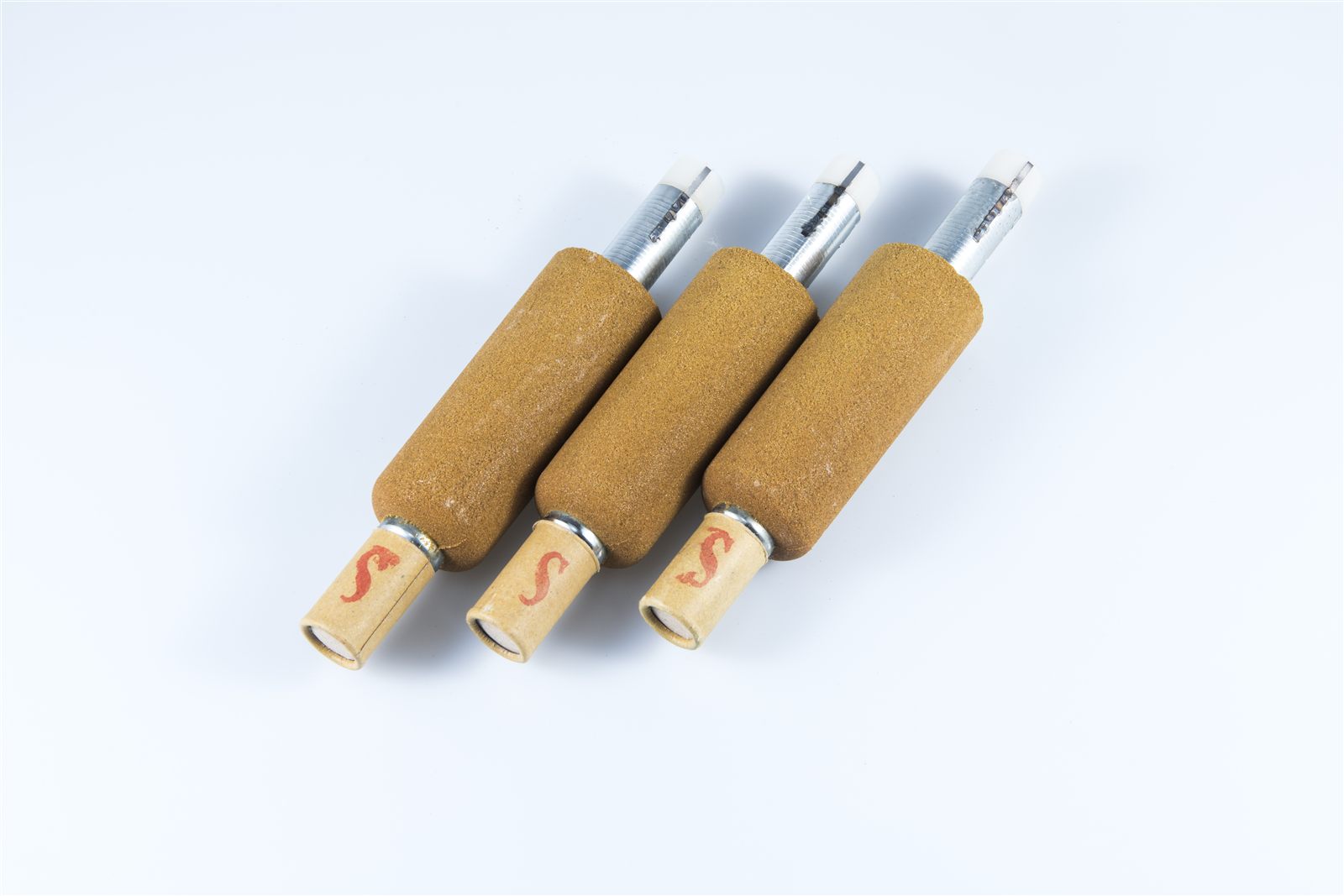
Many newcomers to steelmaking ask: what does an oxygen probe measure? Is it oxygen content? Not exactly — it measures "oxygen activity." What's the difference? Why do steel mills need it?
What Is Oxygen Activity?
Oxygen activity (a[O]) is the "effective concentration" of oxygen atoms in molten steel, in ppm. Unlike total oxygen content from chemical analysis, activity reflects the "freely active" oxygen that actually participates in chemical reactions.
Think of it this way: total oxygen is like the total number of people in a classroom; oxygen activity is the ones actually paying attention and participating. Steelmaking reactions — deoxidation, desulfurization, inclusion formation — all deal with "active oxygen."
Working Principle
At the core of an oxygen probe is a zirconia (ZrO₂) solid electrolyte cell. When inserted into molten steel, the cell contacts steel (high oxygen) on one side and a reference electrode (fixed oxygen) on the other. The oxygen concentration difference generates an EMF (mV). By the Nernst equation, this EMF relates precisely to oxygen activity — the meter measures the voltage and calculates activity.
The whole process takes only 5~10 seconds, similar to fast thermocouples — it's also a disposable probe. Oxygen probes are usually integrated with thermocouples, so one dip gives both temperature and oxygen activity.
Why Does It Matter?
Oxygen activity is a "conductor baton" parameter in steelmaking:
1. Deoxidation control: tells you if you've added enough deoxidizer (Al, Si, Mn). Suitable tapping activity is typically 20~50 ppm depending on steel grade. Too high means under-deoxidized; too low wastes alloy.
2. Carbon calculation: from oxygen activity and temperature, carbon content can be back-calculated — the principle behind "carbon determination." It's a fast endpoint judgment for converters.
3. Soluble aluminum calculation: after Al deoxidation, oxygen activity and temperature give soluble Al (Sol.Al) — critical for low-carbon Al-killed steels like IF steel.
4. Slag FeO estimation: steel oxygen activity estimates slag FeO content, an indicator of slag oxidizing power.
Why Not Just Lab Analysis?
Spectral lab analysis works, but it's slow — 5~10 minutes from sampling to result. Steelmaking is continuous; conditions change every second. An oxygen probe gives results in 10 seconds, allowing operators to adjust deoxidizer dosage and judge the endpoint immediately.
Moreover, lab analysis measures total oxygen at sampling time; an oxygen probe measures real-time activity at the furnace. In fast-paced converter and continuous casting shops, real-time data is far more valuable than post-hoc lab results.
Summary
An oxygen probe doesn't measure "how much oxygen is in the steel" — it measures "how much oxygen can react." This thermodynamic parameter directly determines deoxidation effect, carbon content, soluble Al and other key indicators. In modern steelmaking, an oxygen probe that gives results in seconds saves critical decision time for every heat.