
Hydrogen Determination: Why Is Hydrogen the "Invisible Killer" of Steel?
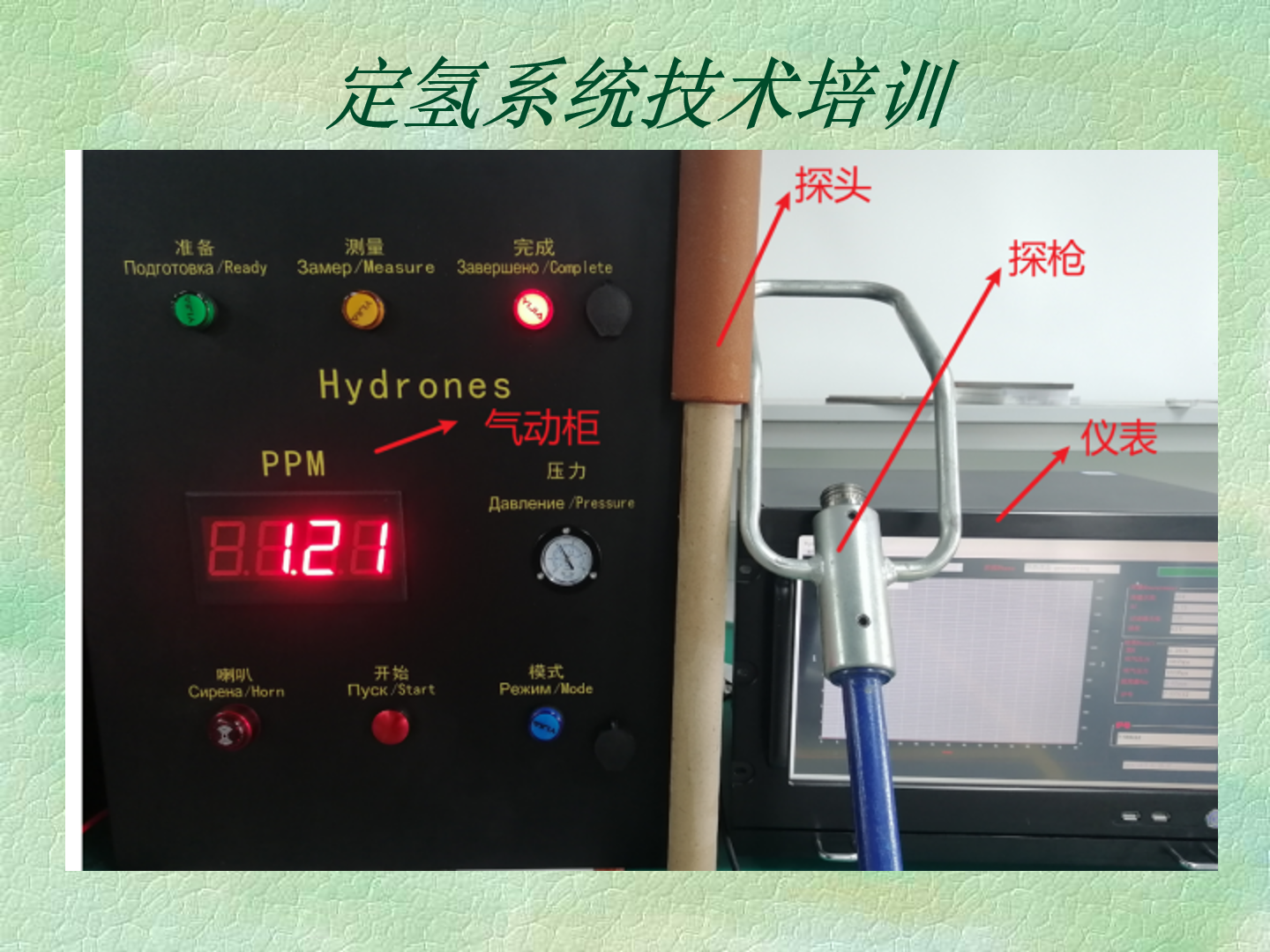
In steelmaking, there's a saying: "Hydrogen is the invisible killer of steel." Why? Hydrogen content in molten steel is usually only a few ppm — can such a tiny amount really cause major problems? The answer is yes.
Where Does Hydrogen Come From?
Hydrogen in steel comes from three main sources:
1. Charge materials: moisture and oil on scrap, pig iron, and alloys decompose into hydrogen at high temperature.
2. Furnace gas: water vapor in combustion products decomposes into hydrogen and dissolves into steel.
3. Refractories and slag: moisture in ladle, tundish refractories and slag also releases hydrogen into the melt.
Although sources are dispersed, they all end up dissolved in steel, typically 1~10 ppm — tiny numbers, but with huge consequences.
Why Is Hydrogen So Dangerous?
The core of hydrogen's harm lies in "precipitation" and "stress":
1. Flakes (white spots): when steel solidifies, hydrogen solubility drops sharply. Supersaturated hydrogen precipitates as tiny bubbles at inclusions or grain boundaries. These appear as silvery-white dots on fracture surfaces called "flakes," causing severe stress concentration and sudden fracture in service.
2. Hydrogen-induced cracking (HIC): during rolling and cooling, hydrogen atoms gather at defects to form H₂ molecules, expanding and creating internal pressure. Combined with external or residual stress, internal cracks form.
3. Seasonal embrittlement: even if OK at delivery, hydrogen slowly diffuses and aggregates during storage or service, degrading properties over time — especially dangerous for heavy forgings like wind turbine shafts and rolling mill rolls, where cracks may appear only in service.
For heavy plates, forgings, and seamless tubes, hydrogen is a critical quality parameter. Industry typically requires below 2~3 ppm; premium steels require below 1 ppm.
How Does a Hydrogen Analyzer Measure It?
Several methods exist; the industrial standard is the "equilibrium method":
Principle: carrier gas (usually N₂ or Ar) is blown through a probe into molten steel. Hydrogen diffuses from steel into the gas until equilibrium. The gas hydrogen concentration is analyzed, and steel hydrogen content is back-calculated.
Process: insert the probe, blow carrier gas through the inner tube — bubbles form in steel, hydrogen diffuses in, gas returns through the outer tube. A thermal conductivity detector (TCD) measures gas hydrogen concentration. The whole process takes about 30~60 seconds.
Range: typically 0.5~14 ppm, accuracy 0.15~0.2 ppm.
Why Fast Measurement Matters
Hydrogen is dynamic — the longer steel stays in the ladle, the more it absorbs from refractories. By the time lab analysis finishes (10~30 minutes), the heat may already be cast. A hydrogen analyzer gives results in 1 minute, letting operators immediately judge: is hydrogen too high? Do we extend vacuum degassing? Do we switch ladles?
For VD/RH vacuum degassing, hydrogen reading is the direct criterion for "when can we break vacuum and tap?"
Summary
Although only a few ppm, hydrogen is the culprit behind flakes, cracking, and seasonal embrittlement. The value of a hydrogen analyzer is giving you a fast furnace-side answer to "is this heat over the hydrogen limit?" — a number that directly determines subsequent degassing and whether the final steel is usable.